

Digital Ship
  • Topics
    • Software, Big Data & IoT
    • Communications & Cyber Security
    • Navigation, Autonomy & New Technologies
    • Features
    • Vessel Performance
  • Markets
    • Ferry and Cruise
    • Tanker
    • Container
    • Bulk
    • Offshore Support
    • Port and Terminal
  • Summit 2026
  • Listen
  • Subscribe
  • Journals
    • AI and Automation 2026
    • Connectivity and Cyber Risk 2026
    • Data and IT Infrastructure 2026
No Result
View All Result
Digital Ship
No Result
View All Result
AST
Summit
Seatrade
DSSLB

The fleet may be the same size. The workload is not.

Vassilis Mavrogiannis by Vassilis Mavrogiannis
25 September 2026
in Features
0
Vassilis Mavrogiannis, Co-Founder and Chief Maritime Officer at AskChief,

Vassilis Mavrogiannis, Co-Founder and Chief Maritime Officer at AskChief,

A new requirement comes into force. A vessel reports a recurring fault. An inspection is approaching, and the HSQE team is gathering the evidence it will need.

Each task carries work beyond the immediate problem. Someone must locate the relevant procedure, trace an earlier decision or establish which version of a document applies. The context has to be assembled before the team can decide what to do.

This is the work around the work. As requirements and reporting demands accumulate, it draws on the same people who must assess defects, interpret regulations and take responsibility for the response.

“As requirements grow, we need to give the people we have better support—so they can focus on more strategic work and the decisions that need their expertise,” says Vassilis Mavrogiannis, Co-Founder and Chief Maritime Officer of AskChief.

Putting company knowledge to work

The opportunity is to turn a company’s existing knowledge — manuals, SMS, defect history, audits and recorded experience — into an AI layer that supports crew and shore teams every day. Doing this well requires AI built around the specific tasks, documents and responsibilities of maritime professionals.

AskChief is built to address this challenge, bringing specialised AI to maritime Technical and HSQE teams. Its two agents support technical troubleshooting and compliance work, drawing on company documents, available vessel history and relevant requirements, with answers linked to their sources.

Supporting each step of troubleshooting

When a breaker trips, finding the relevant drawings, manuals and maintenance records can take time. The electrician then needs to establish what to check, where to measure and what readings to expect.

AskChief acts as a troubleshooting assistant throughout the investigation. It uses the vessel’s equipment documentation and available history to guide checks and measurements, help interpret findings and suggest the next action, with links to supporting sources.

Recording the symptoms, measurements, actions taken and final resolution also makes each investigation useful beyond the immediate fault. When a similar problem recurs, searchable cases help the next electrician build on earlier work and troubleshoot more thoroughly and quickly.

From a new requirement to an SMS revision

The HSQE team faces a similar challenge. Preparing for an audit or inspection involves connecting requirements with company procedures and supporting records. Finding a document is one step; establishing whether it addresses the requirement takes further review.

When a new requirement arrives, the team must determine which SMS sections are affected and whether procedures, forms, checklists or responsibilities need to change.

AskChief helps teams update their SMS when requirements change. It identifies affected chapters and related procedures, forms, checklists and responsibilities, then prepares the corresponding revisions. This helps carry the requirement consistently through the SMS, reducing manual editing and the risk of overlooking connected sections. The team reviews and approves the proposed updates before they take effect and then keeps everyone up to date.

The broader opportunity spans Technical and HSQE work, onboard and ashore: putting the company’s accumulated knowledge to work every day. Success should be judged by whether teams can troubleshoot more effectively, manage changing requirements and make better-informed decisions, while carrying useful experience into the next challenge.
Previous Post

12 vessels, 30 routes: Corsica Ferries automates onboard audio with Seafy

Next Post

Marea Scale Models brings AI-assisted ship design to model making

Related News

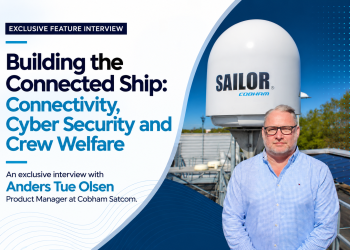
Anders Tue Olsen, Product Manager at Cobham Satcom.
Features

EXCLUSIVE | Building the Connected Ship: Connectivity, Cyber Security and Crew Welfare

Maritime communications were often viewed as a supporting function. Today, connectivity sits at the heart of how ships operate, how...

by Arnel Murga
5 October 2026
Yonghyun Jo, Ph.D., CEO of CYTUR Inc.
Features

After a cyber incident, a ship must prove it is safe to sail 

A cyber incident can delay a ship even when there is no visible damage. Owners should judge resilience by the...

by Yonghyun Jo
2 October 2026
Digital Ship’s Autumn 2026 Data & IT Infrastructure Journal
Features

91.5% want shoreside digital tools onboard, Digital Ship examines fleet IT scale

Digital Ship’s Autumn 2026 Data & IT Infrastructure Journal examines how shipowners can build digital systems that work across vessels,...

by Arnel Murga
30 September 2026
Ethan Tyler Senior Recruitment Consultant at Spinnaker
Features

The maritime technology leadership market has a unicorn problem

Over the past six weeks, I have spent a lot of time speaking with people about technology leadership across shipping...

by Ethan Tyler
28 September 2026
Emmanuel Schalit, CEO of OceanWings
Features

Beyond the sail: What will drive wind propulsion adoption?

After decades on the fringes of commercial shipping, wind propulsion is gaining ground as shipowners search for practical ways to...

by Arnel Murga
21 September 2026
Photo from Digital Ship and GTT Marine.
Features

GTT Marine sees integrated platforms reshaping maritime technology

As shipowners continue to invest in digital technologies, attention is turning to how those systems work together rather than what...

by Arnel Murga
14 September 2026
David Fotheringham, Senior Director of Product Management at Kymeta
Features

Stranded but never disconnected – protecting crew wellbeing when disaster strikes  

Recent tensions in the Middle East have exposed that in a matter of days, geopolitical conflicts can transform ordinary working...

by David Fotheringham
11 September 2026
Photo from Digital Ship and Navigator Gas
Features

Why Maritime IT Needs to Get Better at Working Together

Shipping has more operational data than ever, but David Edwards, Head of Information Technology at Navigator Gas, says the industry...

by Arnel Murga
7 September 2026
Next Post
Photo from Marea.

Marea Scale Models brings AI-assisted ship design to model making

  • Contact
  • Cookies and Privacy

© 2026 Digital Ship Media is part of Antares Digital Group

GDPR Cookie Banner

We are using cookies to give you the best experience on our website.

No Result
View All Result
  • Topics
    • Software, Big Data & IoT
    • Communications & Cyber Security
    • Navigation, Autonomy & New Technologies
    • Features
    • Vessel Performance
  • Markets
    • Ferry and Cruise
    • Tanker
    • Container
    • Bulk
    • Offshore Support
    • Port and Terminal
  • Summit 2026
  • Listen
  • Subscribe
  • Journals
    • AI and Automation 2026
    • Connectivity and Cyber Risk 2026
    • Data and IT Infrastructure 2026

© 2026 Digital Ship Media is part of Antares Digital Group

Powered by  GDPR Cookie Compliance (opens in a new tab)

Privacy Overview

This website uses cookies so that we can provide you with the best user experience possible. Cookie information is stored in your browser and performs functions such as recognising you when you return to our website and helping our team to understand which sections of the website you find most interesting and useful.

Strictly Necessary Cookies

Strictly Necessary Cookie should be enabled at all times so that we can save your preferences for cookie settings.