Digital Ship
  • Topics
    • Software, Big Data & IoT
    • Communications & Cyber Security
    • Navigation, Autonomy & New Technologies
    • Features
    • Vessel Performance
  • Markets
    • Ferry and Cruise
    • Tanker
    • Container
    • Bulk
    • Offshore Support
    • Port and Terminal
  • Summit 2026
  • Listen
  • Subscribe
  • Journals
    • AI and Automation 2026
    • Connectivity and Cyber Risk 2026
    • Data and IT Infrastructure 2026
No Result
View All Result
Digital Ship
No Result
View All Result
Summit

45 industry leaders back ‘Golden Rules’ as BIMCO pushes maritime digitalisation from standards to implementation

Arnel Murga by Arnel Murga
22 June 2026
in Navigation, Autonomy & New Technologies
0
Photo from BIMCO.

Photo from BIMCO.

Maritime digitalisation has spent years defining standards and data models, yet many shipowners still face fragmented systems and disconnected information flows. A workshop led by BIMCO, ITS Norway and the DYNAPORT project suggests the next phase will be less about creating new standards and more about making existing ones work together in practice.

The value of digitalisation is often measured by a simple question: can information move seamlessly between vessel, port, authority and service provider?

That question was at the heart of a recent industry workshop convened by BIMCO in collaboration with ITS Norway and the DYNAPORT project. Held in Copenhagen, the two-day event brought together 45 representatives from shipping companies, ports, authorities and technology providers to examine how the maritime sector can improve interoperability between ship and shore systems.

While discussions around maritime digitalisation have often focused on new technologies, participants agreed that the industry’s main obstacle is now implementation.

According to workshop participants, substantial progress has already been made in defining standards, frameworks and data structures. The remaining task is ensuring those standards are applied consistently across regions, organisations and digital platforms.

One area of broad agreement was the role of the IMO Compendium. Participants viewed it as the industry’s primary semantic reference, providing common definitions and terminology that allow different stakeholders to speak the same digital language. However, they also agreed that the Compendium is not intended to function as a technical blueprint for system integration.

The workshop also found growing support for federated digital architectures. Rather than building a single centralised platform, stakeholders favoured approaches that allow existing systems to exchange information while retaining operational flexibility and avoiding costly system replacement programmes.

Trust was identified as another critical requirement. Participants noted that large-scale international data exchange requires robust frameworks covering identity, authentication and governance across multiple jurisdictions.

Digitalisation projects often struggle when vessels, ports and service providers use different interpretations of the same information. The workshop concluded that greater consistency will come through shared implementation principles rather than additional standards.

To support that effort, participants backed the development of a principle-based industry declaration known as the “Golden Rules for Maritime Digitalisation”, intended to provide practical guidance for organisations seeking to turn digital ambitions into operational reality.

Tags: BulkContainerGas CarrierPort and TerminalTanker
Previous Post

When cyber maturity pays: a tanker operator saves US$32,400 on cyber insurance and gains US$5m cover

Next Post

How Odfjell turned AI into a tool crews actually use

Related News

Photo from UKHO.
Navigation, Autonomy & New Technologies

UKHO and ESA open free S-100 data to space services ahead of 2029

The UK Hydrographic Office and the European Space Agency are giving companies free S-100 data licences to build services that...

by Arnel Murga
9 November 2026
Photo form AskChief.
Navigation, Autonomy & New Technologies

AskChief opens maritime AI to all owners after 100 vessels in a year

Athens and London-based AskChief says use of its technical and compliance AI typically triples within 90 days of deployment. The...

by Arnel Murga
6 November 2026
Photo from STEER.
Navigation, Autonomy & New Technologies

STEER report ties 43% of 471 casualties to equipment and workplace factors

The Nautical Institute and Lloyd’s Register Foundation reviewed 471 casualty cases. In 43.1% of them, at least one human-factor cause...

by Arnel Murga
5 November 2026
Photo from K Line.
Navigation, Autonomy & New Technologies

K Line ties new AI and digital strategy to ¥1.1 trillion investment plan to 2031

Japan’s Kawasaki Kisen Kaisha has launched a five-year management plan and a new AI & Digital Strategy built around data-led...

by Arnel Murga
5 November 2026
Photo by Miwa from Pexels: https://www.pexels.com/photo/scenic-yokohama-skyline-with-landmark-tower-31783205/
Navigation, Autonomy & New Technologies

Noahlogy joins AVEVA ecosystem to bring AI checks to 3D ship designs

Noahlogy, a Tokyo AI company set up in November 2024, has signed a partner ecosystem membership agreement with industrial software...

by Arnel Murga
4 November 2026
Photo from Valmet.
Navigation, Autonomy & New Technologies

TT-Line selects Valmet automation for two new LNG-hybrid ferries

TT-Line, the German ferry operator, has picked Valmet to supply the full automation package for two Green Ship 2.0 vessels...

by Arnel Murga
4 November 2026
Photo from A-GOS.
Navigation, Autonomy & New Technologies

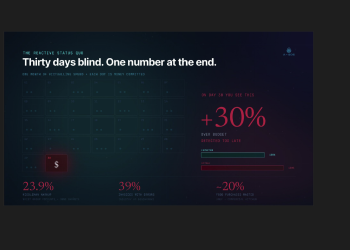
A-GOS founder Oleksandr Pyenov targets the 30-day blind spot in fleet victualling spend

Most shipowners only find out whether a vessel’s food budget held when the month-end report arrives. A former master backed...

by Arnel Murga
3 November 2026
Photo from Navtor.
Navigation, Autonomy & New Technologies

NAVTOR uses its NavBox network across 18,000 vessels to stream live AIS into NavFleet

The Norwegian company says ship managers can now see any vessel in near real time without paying for costly satellite...

by Arnel Murga
3 November 2026
Next Post
Alena Pedersen, Vice President Corporate IT and Digitalisation at Odfjell.

How Odfjell turned AI into a tool crews actually use

  • Contact
  • Cookies and Privacy

© 2026 Digital Ship Media is part of Antares Digital Group

GDPR Cookie Banner

We are using cookies to give you the best experience on our website.

No Result
View All Result
  • Topics
    • Software, Big Data & IoT
    • Communications & Cyber Security
    • Navigation, Autonomy & New Technologies
    • Features
    • Vessel Performance
  • Markets
    • Ferry and Cruise
    • Tanker
    • Container
    • Bulk
    • Offshore Support
    • Port and Terminal
  • Summit 2026
  • Listen
  • Subscribe
  • Journals
    • AI and Automation 2026
    • Connectivity and Cyber Risk 2026
    • Data and IT Infrastructure 2026

© 2026 Digital Ship Media is part of Antares Digital Group

Powered by  GDPR Cookie Compliance (opens in a new tab)
Privacy Overview

This website uses cookies so that we can provide you with the best user experience possible. Cookie information is stored in your browser and performs functions such as recognising you when you return to our website and helping our team to understand which sections of the website you find most interesting and useful.

Strictly Necessary Cookies

Strictly Necessary Cookie should be enabled at all times so that we can save your preferences for cookie settings.