Digital Ship
  • Topics
    • Software, Big Data & IoT
    • Communications & Cyber Security
    • Navigation, Autonomy & New Technologies
    • Features
    • Vessel Performance
  • Markets
    • Ferry and Cruise
    • Tanker
    • Container
    • Bulk
    • Offshore Support
    • Port and Terminal
  • Summit 2026
  • Listen
  • Subscribe
  • Journals
    • AI and Automation 2026
    • Connectivity and Cyber Risk 2026
    • Data and IT Infrastructure 2026
No Result
View All Result
Digital Ship
No Result
View All Result
Seatrade
Summit
AST
DSSLB

70,000 corruption reports turn into operational intelligence for shipowners

Arnel Murga by Arnel Murga
19 August 2026
in Navigation, Autonomy & New Technologies
0
Photo from MACN.

Photo from MACN.

MACN has turned more than 70,000 corruption incident reports covering over 1,350 ports into digital tools that help shipping companies assess port risks and prepare crews before arrival. The Global Port Integrity Platform also gives operators API access and automated communications, bringing corruption intelligence closer to everyday fleet operations.

Corruption risk at ports has traditionally been managed through experience, local knowledge and the judgement of crews and shore teams. The Maritime Anti-Corruption Network (MACN) is now putting more structured data behind those decisions, using more than a decade of incident reporting to build operational intelligence for shipping companies.

Supported by The Danish Maritime Fund, MACN’s Global Port Integrity Platform (GPIP) combines more than 70,000 verified reports from over 1,350 ports worldwide. The platform provides interactive dashboards, API integrations and automated vessel communications, with more than 75 organisations already using its dashboard tools.

More than 350 shipping companies also receive corruption risk information through MACN’s pre-arrival communication systems. A low-bandwidth automated service sends port-specific information to captains and crews before arrival, giving them details on reported risks and helping them prepare for situations they may encounter.

For shipowners and managers, the digital approach brings corruption intelligence into operational workflows rather than leaving it as information held by individual employees or passed between teams. Port comparisons and incident patterns can also give shore-based teams a more consistent basis for assessing risks across their networks.

“Shipping generates enormous amounts of operational data, but historically there has been very limited structured data available to help companies understand and manage corruption risks at the ports where they operate,” said Cecilia Müller Torbrand, CEO of MACN. “This initiative demonstrates how maritime data can be transformed into practical intelligence that supports better decisions, protects crews, and strengthens integrity across the industry.”

The platform is also opening a route towards AI applications. TORM is exploring API access to MACN’s incident database as part of its data and AI work.

“The API integration with MACN’s corruption incidents database opens new possibilities for us. We’re exploring how to transform this real maritime data into actionable intelligence that flows directly to our vessels. It demonstrates how data collaboration can drive meaningful innovation in our industry,” said Uriel Chareca, Head of Group Data & AI, TORM.

GPIP shows where maritime digitalisation can have a practical role beyond performance, routing and maintenance. Turning historical incident reports into accessible intelligence gives shipowners and crews another data source when preparing for port calls and managing integrity risks.

Tags: BulkContainerPort and TerminalTanker
Previous Post

S-100 data sources could reshape how shipowners manage navigation

Next Post

TGS moves 10TB of seismic data a day with all-LEO connectivity from Speedcast

Related News

Ships Anchored in Singapore Strait Aerial View at Singapore, Singapore. Photo by Saksham Vikram: https://www.pexels.com/photo/ships-anchored-in-singapore-strait-aerial-view-34358849/
Communications & Cyber Security

Singapore MPA Bill puts cybersecurity and autonomy into maritime regulation

Singapore is preparing to give its maritime regulator wider powers over cybersecurity, autonomous vessels, AI and digital systems under proposed...

by Arnel Murga
8 October 2026
Photo from UK Hydrographic Office
Navigation, Autonomy & New Technologies

S-100 trials aboard Stena Vinga test how digital navigation can support bridge teams

A fourth S-100 sea trial aboard Stena Vinga tested how digital charts, bathymetry, water levels and currents can support bridge...

by Arnel Murga
7 October 2026
Photo from Hanwa.
Navigation, Autonomy & New Technologies

Hanwha’s AI energy system targets 5% to 25% savings as fleet energy management evolves

Hanwha’s EnergyFluo™ uses agentic AI to coordinate generation, storage and energy loads, with targeted savings of 5% to 25%. Its...

by Arnel Murga
7 October 2026
CMA D. ARGOUDELIS & CO S.A.
Navigation, Autonomy & New Technologies

CMA Argoudelis redesigns digital platform around marine automation and lifecycle support

CMA D. Argoudelis & Co has launched a redesigned corporate website aimed at giving shipowners, operators and technical teams a...

by Arnel Murga
6 October 2026
Photo from NYK.
Navigation, Autonomy & New Technologies

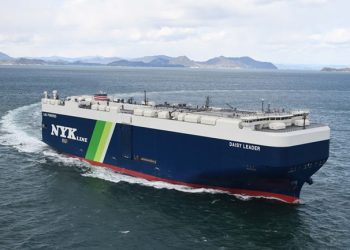
NYK opens Silicon Valley office to source AI and digital technologies

NYK Group Americas is opening a Silicon Valley branch in Sunnyvale, California, to identify emerging technologies and business models that...

by Arnel Murga
5 October 2026
Photo from Seasats.
Navigation, Autonomy & New Technologies

Seasats deploys USV fleet as autonomous surveillance expands into open water

Seasats has deployed a fleet of solar-powered Lightfish USVs in the Gulf of America, extending autonomous surveillance from river operations...

by Arnel Murga
5 October 2026
Photo from Acheon Akti Navigation CO Ltd Acheon Akti Navigation CO Ltd.
Navigation, Autonomy & New Technologies

Acheon Akti reports almost 20-fold drop in bridge near misses with EVI AI system

Acheon Akti is preparing to deploy EVI Safety Technology’s AI-enabled safety system across more vessels after a pilot reported an...

by Arnel Murga
2 October 2026
Earning Trust: AI in Maritime From productivity gains to verification, trust and accountability Commissioned by Marcura
Navigation, Autonomy & New Technologies

Thetius and Marcura: 63% use AI daily, but only 8% report mature governance

AI is now part of routine work across maritime companies, yet Thetius and Marcura’s 2026 research finds a wide gap...

by Arnel Murga
2 October 2026
Next Post
Photo from Speedcast.

TGS moves 10TB of seismic data a day with all-LEO connectivity from Speedcast

  • Contact
  • Cookies and Privacy

© 2026 Digital Ship Media is part of Antares Digital Group

GDPR Cookie Banner

We are using cookies to give you the best experience on our website.

No Result
View All Result
  • Topics
    • Software, Big Data & IoT
    • Communications & Cyber Security
    • Navigation, Autonomy & New Technologies
    • Features
    • Vessel Performance
  • Markets
    • Ferry and Cruise
    • Tanker
    • Container
    • Bulk
    • Offshore Support
    • Port and Terminal
  • Summit 2026
  • Listen
  • Subscribe
  • Journals
    • AI and Automation 2026
    • Connectivity and Cyber Risk 2026
    • Data and IT Infrastructure 2026

© 2026 Digital Ship Media is part of Antares Digital Group

Powered by  GDPR Cookie Compliance (opens in a new tab)

Privacy Overview

This website uses cookies so that we can provide you with the best user experience possible. Cookie information is stored in your browser and performs functions such as recognising you when you return to our website and helping our team to understand which sections of the website you find most interesting and useful.

Strictly Necessary Cookies

Strictly Necessary Cookie should be enabled at all times so that we can save your preferences for cookie settings.