Digital Ship
  • Topics
    • Software, Big Data & IoT
    • Communications & Cyber Security
    • Navigation, Autonomy & New Technologies
    • Features
    • Vessel Performance
  • Markets
    • Ferry and Cruise
    • Tanker
    • Container
    • Bulk
    • Offshore Support
    • Port and Terminal
  • Summit 2026
  • Listen
  • Subscribe
  • Journals
    • AI and Automation 2026
    • Connectivity and Cyber Risk 2026
    • Data and IT Infrastructure 2026
No Result
View All Result
Digital Ship
No Result
View All Result
AST
Summit
Seatrade
DSSLB

AI Route Planning Cuts Ship Fuel Use by 5.3%

Arnel Murga by Arnel Murga
5 November 2025
in Navigation, Autonomy & New Technologies
0
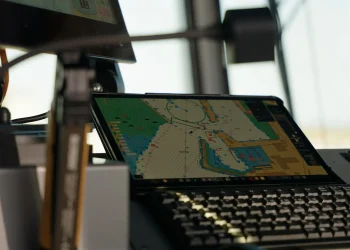
Voyage Comparison. Photo by Weathernews.com

Voyage Comparison. Photo by Weathernews.com

Weathernews and HD Hyundai Marine Solution have launched OSR-OW, a route optimization tool that blends weather forecasts with AI vessel modeling. Early trials show average fuel savings of 5.3%, offering shipping companies both cost and emissions benefits.

Shipping companies are beginning to see tangible fuel savings with a new artificial intelligence route planning system developed by Weathernews and HD Hyundai Marine Solution. The tool, called OSR-OW, combines weather forecasting with AI-based vessel performance models to guide captains toward more efficient routes.

Trials conducted across eight vessels in 2024 showed an average fuel reduction of 5.3%. The companies guarantee at least 3% savings, which equates to about $150,000 for every 1,000 tons of fuel consumed. The results suggest that AI-enhanced routing can play a practical role in cutting both operating costs and emissions in the maritime sector.

The technology integrates Weathernews’ forecasting with Hyundai’s OceanWise performance platform. Complex calculations take place behind the scenes, with recommendations delivered through Weathernews’ existing SeaNavigator platform. This approach allows operators to continue using a familiar interface while benefiting from AI-driven optimization.

According to the developers, the system performs best on long voyages through open waters, where weather has the largest impact on routing choices. While the AI has delivered consistent results across most vessel types, refinements are still being made for LNG carriers and for ships running on newer fuels such as methanol and ammonia.

Sanghyub Park, who leads Weathernews’ maritime operations in Korea, said the strength of the platform lies in its integrated design. “OSR-OW is not merely a combination of functions, but the industry’s first attempt to integrate weather information and performance optimization technology on a single platform. We have already received high interest from major global shipping companies, and we will continue to provide substantial cost reduction and ESG value through customized optimization for each client,” Park said.

The AI models have been trained on thousands of voyages, blending machine learning with traditional nautical engineering principles. They adapt continuously by processing fresh voyage data and checking predictions against real-world outcomes. This feedback loop ensures the system improves as vessels age and as new conditions arise.

More than 600 ships are already using Hyundai’s OceanWise platform and over 3,000 vessels rely on Weathernews’ OSR system. OSR-OW is now being deployed with Korean fleets and will be rolled out globally in the coming years.

By aligning real-time weather intelligence with AI vessel modeling, the developers believe OSR-OW gives operators a practical tool to navigate both rising fuel costs and tightening emissions regulations. It highlights how AI is no longer experimental in shipping but is becoming a key part of daily operations.

Tags: Gas Carrier
Previous Post

Sperry to Equip Samskip Hydrogen Ships

Next Post

AI System Targets USV High-Speed Safety

Related News

Ships Anchored in Singapore Strait Aerial View at Singapore, Singapore. Photo by Saksham Vikram: https://www.pexels.com/photo/ships-anchored-in-singapore-strait-aerial-view-34358849/
Communications & Cyber Security

Singapore MPA Bill puts cybersecurity and autonomy into maritime regulation

Singapore is preparing to give its maritime regulator wider powers over cybersecurity, autonomous vessels, AI and digital systems under proposed...

by Arnel Murga
8 October 2026
Photo from UK Hydrographic Office
Navigation, Autonomy & New Technologies

S-100 trials aboard Stena Vinga test how digital navigation can support bridge teams

A fourth S-100 sea trial aboard Stena Vinga tested how digital charts, bathymetry, water levels and currents can support bridge...

by Arnel Murga
7 October 2026
Photo from Hanwa.
Navigation, Autonomy & New Technologies

Hanwha’s AI energy system targets 5% to 25% savings as fleet energy management evolves

Hanwha’s EnergyFluo™ uses agentic AI to coordinate generation, storage and energy loads, with targeted savings of 5% to 25%. Its...

by Arnel Murga
7 October 2026
CMA D. ARGOUDELIS & CO S.A.
Navigation, Autonomy & New Technologies

CMA Argoudelis redesigns digital platform around marine automation and lifecycle support

CMA D. Argoudelis & Co has launched a redesigned corporate website aimed at giving shipowners, operators and technical teams a...

by Arnel Murga
6 October 2026
Photo from NYK.
Navigation, Autonomy & New Technologies

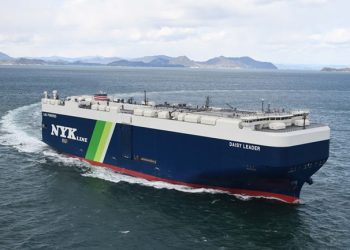
NYK opens Silicon Valley office to source AI and digital technologies

NYK Group Americas is opening a Silicon Valley branch in Sunnyvale, California, to identify emerging technologies and business models that...

by Arnel Murga
5 October 2026
Photo from Seasats.
Navigation, Autonomy & New Technologies

Seasats deploys USV fleet as autonomous surveillance expands into open water

Seasats has deployed a fleet of solar-powered Lightfish USVs in the Gulf of America, extending autonomous surveillance from river operations...

by Arnel Murga
5 October 2026
Photo from Acheon Akti Navigation CO Ltd Acheon Akti Navigation CO Ltd.
Navigation, Autonomy & New Technologies

Acheon Akti reports almost 20-fold drop in bridge near misses with EVI AI system

Acheon Akti is preparing to deploy EVI Safety Technology’s AI-enabled safety system across more vessels after a pilot reported an...

by Arnel Murga
2 October 2026
Earning Trust: AI in Maritime From productivity gains to verification, trust and accountability Commissioned by Marcura
Navigation, Autonomy & New Technologies

Thetius and Marcura: 63% use AI daily, but only 8% report mature governance

AI is now part of routine work across maritime companies, yet Thetius and Marcura’s 2026 research finds a wide gap...

by Arnel Murga
2 October 2026
Next Post
Photo from Hefring Marine.

AI System Targets USV High-Speed Safety

  • Contact
  • Cookies and Privacy

© 2026 Digital Ship Media is part of Antares Digital Group

GDPR Cookie Banner

We are using cookies to give you the best experience on our website.

No Result
View All Result
  • Topics
    • Software, Big Data & IoT
    • Communications & Cyber Security
    • Navigation, Autonomy & New Technologies
    • Features
    • Vessel Performance
  • Markets
    • Ferry and Cruise
    • Tanker
    • Container
    • Bulk
    • Offshore Support
    • Port and Terminal
  • Summit 2026
  • Listen
  • Subscribe
  • Journals
    • AI and Automation 2026
    • Connectivity and Cyber Risk 2026
    • Data and IT Infrastructure 2026

© 2026 Digital Ship Media is part of Antares Digital Group

Powered by  GDPR Cookie Compliance (opens in a new tab)

Privacy Overview

This website uses cookies so that we can provide you with the best user experience possible. Cookie information is stored in your browser and performs functions such as recognising you when you return to our website and helping our team to understand which sections of the website you find most interesting and useful.

Strictly Necessary Cookies

Strictly Necessary Cookie should be enabled at all times so that we can save your preferences for cookie settings.