Digital Ship
  • Topics
    • Software, Big Data & IoT
    • Communications & Cyber Security
    • Navigation, Autonomy & New Technologies
    • Features
    • Vessel Performance
  • Markets
    • Ferry and Cruise
    • Tanker
    • Container
    • Bulk
    • Offshore Support
    • Port and Terminal
  • Summit 2026
  • Listen
  • Subscribe
  • Journals
    • AI and Automation 2026
    • Connectivity and Cyber Risk 2026
    • Data and IT Infrastructure 2026
No Result
View All Result
Digital Ship
No Result
View All Result
Summit

CIMAC says 200-microsecond ship systems need digital-ready regulation

Arnel Murga by Arnel Murga
20 August 2026
in Navigation, Autonomy & New Technologies
0
Photo from ABB.

Photo from ABB.

CIMAC is calling for maritime regulation to catch up with ships built around connected and integrated systems. For shipowners and managers, the issue is whether rules can keep pace with technologies that increasingly link machinery, data and human decisions.

Shipping’s digital transformation is changing how ships are operated, but CIMAC says regulation must account for the way onboard systems now interact.

Ship-to-shore connectivity has enabled remote maintenance, performance monitoring, route optimisation and verified emissions reporting. Yet many regulations were developed around individual functions and standalone systems, while modern vessels can operate as connected ecosystems.

The gap can be striking. Engineering may define real-time control as a 200-microsecond feedback loop, while legal language can refer to acting with “best possible haste” or “without undue delay”. CIMAC says this difference matters when regulators set requirements for systems that respond to one another.

“Ships are made significantly safer and more efficient when technologies on board operate on an integrated basis,” said Daniel Erdmann, Deputy Secretary General, CIMAC. “A ship today should be seen as a system of systems, whose safety and performance is enhanced when managed as a unified data ecosystem.”

Rules designed around individual technologies can create operational problems when those technologies are integrated with other equipment, software and crew decisions.

Eero Lehtovaara, Head of Regulatory and Public Affairs at ABB’s Marine & Ports division and Vice President, Digitalization at CIMAC, said there is currently “no overarching maritime regulation on integrated systems”.

The issue is particularly relevant as autonomous and remotely operated vessels enter regulatory frameworks. The IMO’s non-mandatory Maritime Autonomous Surface Ships Code took effect on July 1, 2026, while a mandatory version is expected to be adopted by 2030 and enter into force by 2032.

CIMAC is also part of an IACS working group examining digitalisation and complex ship systems, with a formal submission to IMO expected in 2027. The wider objective is to help shape SOLAS for ships operating in a far more connected digital environment.

Regulatory certainty matters because technology investments often span decades. Digital systems can deliver operational gains, but only when the rules governing their use understand how those systems actually work.

Tags: BulkContainerTanker
Previous Post

TGS moves 10TB of seismic data a day with all-LEO connectivity from Speedcast

Next Post

Scorpio Tankers reports zero cyber incidents as vessel systems become more connected

Related News

Photo from UKHO.
Navigation, Autonomy & New Technologies

UKHO and ESA open free S-100 data to space services ahead of 2029

The UK Hydrographic Office and the European Space Agency are giving companies free S-100 data licences to build services that...

by Arnel Murga
9 November 2026
Photo form AskChief.
Navigation, Autonomy & New Technologies

AskChief opens maritime AI to all owners after 100 vessels in a year

Athens and London-based AskChief says use of its technical and compliance AI typically triples within 90 days of deployment. The...

by Arnel Murga
6 November 2026
Photo from STEER.
Navigation, Autonomy & New Technologies

STEER report ties 43% of 471 casualties to equipment and workplace factors

The Nautical Institute and Lloyd’s Register Foundation reviewed 471 casualty cases. In 43.1% of them, at least one human-factor cause...

by Arnel Murga
5 November 2026
Photo from K Line.
Navigation, Autonomy & New Technologies

K Line ties new AI and digital strategy to ¥1.1 trillion investment plan to 2031

Japan’s Kawasaki Kisen Kaisha has launched a five-year management plan and a new AI & Digital Strategy built around data-led...

by Arnel Murga
5 November 2026
Photo by Miwa from Pexels: https://www.pexels.com/photo/scenic-yokohama-skyline-with-landmark-tower-31783205/
Navigation, Autonomy & New Technologies

Noahlogy joins AVEVA ecosystem to bring AI checks to 3D ship designs

Noahlogy, a Tokyo AI company set up in November 2024, has signed a partner ecosystem membership agreement with industrial software...

by Arnel Murga
4 November 2026
Photo from Valmet.
Navigation, Autonomy & New Technologies

TT-Line selects Valmet automation for two new LNG-hybrid ferries

TT-Line, the German ferry operator, has picked Valmet to supply the full automation package for two Green Ship 2.0 vessels...

by Arnel Murga
4 November 2026
Photo from A-GOS.
Navigation, Autonomy & New Technologies

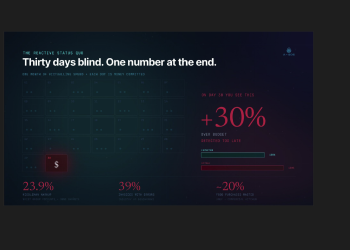
A-GOS founder Oleksandr Pyenov targets the 30-day blind spot in fleet victualling spend

Most shipowners only find out whether a vessel’s food budget held when the month-end report arrives. A former master backed...

by Arnel Murga
3 November 2026
Photo from Navtor.
Navigation, Autonomy & New Technologies

NAVTOR uses its NavBox network across 18,000 vessels to stream live AIS into NavFleet

The Norwegian company says ship managers can now see any vessel in near real time without paying for costly satellite...

by Arnel Murga
3 November 2026
Next Post
Photo from Scorpio Tankers.

Scorpio Tankers reports zero cyber incidents as vessel systems become more connected

  • Contact
  • Cookies and Privacy

© 2026 Digital Ship Media is part of Antares Digital Group

GDPR Cookie Banner

We are using cookies to give you the best experience on our website.

No Result
View All Result
  • Topics
    • Software, Big Data & IoT
    • Communications & Cyber Security
    • Navigation, Autonomy & New Technologies
    • Features
    • Vessel Performance
  • Markets
    • Ferry and Cruise
    • Tanker
    • Container
    • Bulk
    • Offshore Support
    • Port and Terminal
  • Summit 2026
  • Listen
  • Subscribe
  • Journals
    • AI and Automation 2026
    • Connectivity and Cyber Risk 2026
    • Data and IT Infrastructure 2026

© 2026 Digital Ship Media is part of Antares Digital Group

Powered by  GDPR Cookie Compliance (opens in a new tab)
Privacy Overview

This website uses cookies so that we can provide you with the best user experience possible. Cookie information is stored in your browser and performs functions such as recognising you when you return to our website and helping our team to understand which sections of the website you find most interesting and useful.

Strictly Necessary Cookies

Strictly Necessary Cookie should be enabled at all times so that we can save your preferences for cookie settings.