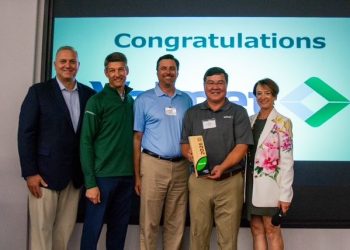
DNV and Garden Reach Shipbuilders and Engineers Limited (GRSE) have signed an MoU covering advanced shipbuilding, digitalisation, green technologies and competence development, with AI-enabled design, digital twins and cybersecurity among the areas set for cooperation.
Signed at SMM in Hamburg, the agreement gives GRSE access to DNV’s classification and technical expertise across naval, defence and specialised vessels, while also covering modular construction, design optimisation and autonomous platforms.
The technologies being discussed at the design and construction stage can shape how vessels are modelled, tested, monitored and maintained after delivery. The MoU does not set out specific onboard systems or operational targets, but its inclusion of digital twins and AI-enabled ship design places digital engineering within the wider lifecycle of future vessels.
The two organisations will also work on cybersecurity, an area that becomes more important as ship systems, engineering platforms and operational data become more connected.
DNV CEO Knut Ørbeck-Nilssen said the agreement comes against an uncertain market environment, while pointing to the opportunity to build new capabilities across the maritime sector.
“Shipbuilders are being asked to make long-term decisions against a backdrop of geopolitical tension and market unpredictability, and that uncertainty is one of the biggest concerns we hear across the industry. But this also creates opportunities for innovation and to develop new capabilities, across the whole maritime value chain.”
He added that DNV has worked with Indian shipping and shipbuilding for more than five decades and described GRSE as a “future focussed partner”.
GRSE Chairman and Managing Director Cmde P R Hari said: “This is a partnership focused on innovation, sustainability and global excellence – contributing to a stronger and more self-reliant Indian maritime and defence ecosystem.”
The agreement also covers electric and hybrid propulsion ferries, low-carbon naval auxiliary vessels and alternative fuel pathways involving hydrogen and ammonia. Lifecycle emissions assessments and compliance with Maritime Amrit Kaal Vision 2047 are included.
Training will form another part of the partnership, with joint programmes planned for GRSE professionals, Indian naval architects and surveyors, with particular attention to strengthening capabilities in India’s Eastern maritime cluster.