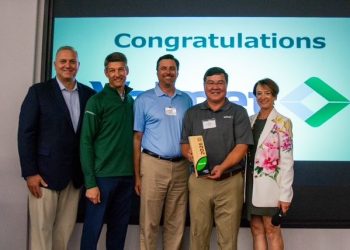
Noahlogy, a Tokyo AI company set up in November 2024, has signed a partner ecosystem membership agreement with industrial software group AVEVA to work on AI-assisted design verification for shipbuilding. The work is still at the testing stage, but owners waiting on newbuild deliveries have good reason to watch it.
Noahlogy has signed an AVEVA Partner Ecosystem Member Agreement with AVEVA Software, LLC. The two companies will work together to test and verify a shipbuilding design support tool that uses 3D CAD data, with the aim of turning it into a commercial product.
In shipbuilding, 3D CAD models map the hull structure and the layout of piping and equipment, and they hold details such as dimensions and materials. Designers have to check these models against drawings, specifications and design requirements. Noahlogy says the amount of information is vast and the checks take a lot of time and specialist knowledge.
So far the company has built a demo using 3D models. It is testing whether AI can read and visualise AVEVA’s 3D model data and make judgements against set check items. Noahlogy says it will verify, one by one, which types of data and check items the AI can assess accurately. It wants a system that fits into everyday design work at shipyards and design offices.
The company’s stated mission is to “revolutionize the maritime industry with AI technology for the sake of future generations.”
The industry problem it targets is real for owners all the same. A design error caught late at the yard can mean rework, change orders and a later delivery date, and the shipowner usually ends up absorbing those costs. Faster and more consistent checking of 3D models would mean fewer of those errors getting through to fabrication.
There is also a knowledge issue. Design verification relies on experienced people, and Noahlogy says its tools are meant to support the transfer of technical knowledge as well as speed up the work.
Owners placing newbuild orders should ask their yards how designs are checked before steel is cut. They should also ask whether the 3D data behind their ships will be handed over in a form they can use once the vessel enters service.