Digital Ship
  • Topics
    • Software, Big Data & IoT
    • Communications & Cyber Security
    • Navigation, Autonomy & New Technologies
    • Features
    • Vessel Performance
  • Markets
    • Ferry and Cruise
    • Tanker
    • Container
    • Bulk
    • Offshore Support
    • Port and Terminal
  • Summit 2026
  • Listen
  • Subscribe
  • Journals
    • AI and Automation 2026
    • Connectivity and Cyber Risk 2026
    • Data and IT Infrastructure 2026
No Result
View All Result
Digital Ship
No Result
View All Result
Summit

Digital seafarer credentials could cut crew verification delays

Arnel Murga by Arnel Murga
29 October 2026
in Navigation, Autonomy & New Technologies
0
Securing Trust: The Transition to Digital Seafarer Credentials

Securing Trust: The Transition to Digital Seafarer Credentials

Shipowners and managers still rely on paper certificates, scanned documents and manual checks to verify seafarers’ qualifications, creating extra work for crewing teams and potential delays during crew changes. A new report by Thetius and Maritime Passport argues that interoperable digital credentials could make verification faster while protecting regulatory authority and seafarers’ personal data.

An estimated 2.57 million seafarers serve more than 85,000 merchant ships worldwide, yet much of the evidence used to verify their qualifications remains on paper or in scanned copies, according to a report by maritime technology research firm Thetius and digital credential provider Maritime Passport.

The report, Securing Trust: The Transition to Digital Seafarer Credentials, examines how digital identity systems could help shipowners and managers reduce administrative work, improve crew planning and verify certificates more reliably.

For crewing departments, the current process can be time-consuming. Dorthe Karlsen, Recruitment Director at OSM Thome, which recruits around 6,000 seafarers annually, said entering the details of a captain joining an offshore vessel can take “one to two hours”. Manual data entry also creates opportunities for errors, while missing or expired certificates can disrupt crew changes.

The report argues that converting paper certificates into PDFs will not resolve these problems on its own. Digital credentials must establish that a document belongs to the seafarer presenting it, came from an authorised issuer and remains valid. They must also be verifiable across different systems without requiring shipowners, training providers and flag administrations to use the same platform.

Regulatory arrangements are already developing. Amendments to the International Convention on Standards of Training, Certification and Watchkeeping for Seafarers took effect on 1 January 2025, recognising paper and electronic forms of original certificates. The UK Maritime and Coastguard Agency also began issuing Flag State Endorsements electronically on 1 September 2026.

However, adoption remains uneven. The report warns that separate digital platforms could reproduce the fragmentation of the paper-based system unless common standards allow credentials to be exchanged and checked independently.

Data protection is another consideration. Shipowners need access to relevant qualifications and medical fitness information, but the report argues that personal information should be limited to what is necessary for verification.

For ship managers, the practical case rests on reducing repeated checks, identifying expiring certificates before crew assignments and maintaining reliable access to records during inspections. Thetius recommends starting with specific, measurable use cases before expanding digital credentials across the industry.

Previous Post

SEA.AI and Oneberry combine AI vision with off-grid maritime surveillance

Next Post

BSM reports 98.3% fleet participation in digital safety monitoring, completes 539 vessel audits

Related News

Photo from UKHO.
Navigation, Autonomy & New Technologies

UKHO and ESA open free S-100 data to space services ahead of 2029

The UK Hydrographic Office and the European Space Agency are giving companies free S-100 data licences to build services that...

by Arnel Murga
9 November 2026
Photo form AskChief.
Navigation, Autonomy & New Technologies

AskChief opens maritime AI to all owners after 100 vessels in a year

Athens and London-based AskChief says use of its technical and compliance AI typically triples within 90 days of deployment. The...

by Arnel Murga
6 November 2026
Photo from STEER.
Navigation, Autonomy & New Technologies

STEER report ties 43% of 471 casualties to equipment and workplace factors

The Nautical Institute and Lloyd’s Register Foundation reviewed 471 casualty cases. In 43.1% of them, at least one human-factor cause...

by Arnel Murga
5 November 2026
Photo from K Line.
Navigation, Autonomy & New Technologies

K Line ties new AI and digital strategy to ¥1.1 trillion investment plan to 2031

Japan’s Kawasaki Kisen Kaisha has launched a five-year management plan and a new AI & Digital Strategy built around data-led...

by Arnel Murga
5 November 2026
Photo by Miwa from Pexels: https://www.pexels.com/photo/scenic-yokohama-skyline-with-landmark-tower-31783205/
Navigation, Autonomy & New Technologies

Noahlogy joins AVEVA ecosystem to bring AI checks to 3D ship designs

Noahlogy, a Tokyo AI company set up in November 2024, has signed a partner ecosystem membership agreement with industrial software...

by Arnel Murga
4 November 2026
Photo from Valmet.
Navigation, Autonomy & New Technologies

TT-Line selects Valmet automation for two new LNG-hybrid ferries

TT-Line, the German ferry operator, has picked Valmet to supply the full automation package for two Green Ship 2.0 vessels...

by Arnel Murga
4 November 2026
Photo from A-GOS.
Navigation, Autonomy & New Technologies

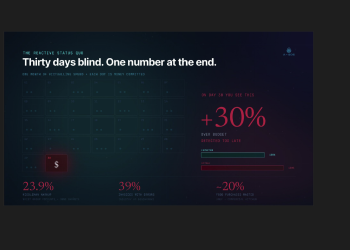
A-GOS founder Oleksandr Pyenov targets the 30-day blind spot in fleet victualling spend

Most shipowners only find out whether a vessel’s food budget held when the month-end report arrives. A former master backed...

by Arnel Murga
3 November 2026
Photo from Navtor.
Navigation, Autonomy & New Technologies

NAVTOR uses its NavBox network across 18,000 vessels to stream live AIS into NavFleet

The Norwegian company says ship managers can now see any vessel in near real time without paying for costly satellite...

by Arnel Murga
3 November 2026
Next Post
Photo from Bernhard Schulte Shipmanagement.

BSM reports 98.3% fleet participation in digital safety monitoring, completes 539 vessel audits

  • Contact
  • Cookies and Privacy

© 2026 Digital Ship Media is part of Antares Digital Group

GDPR Cookie Banner

We are using cookies to give you the best experience on our website.

No Result
View All Result
  • Topics
    • Software, Big Data & IoT
    • Communications & Cyber Security
    • Navigation, Autonomy & New Technologies
    • Features
    • Vessel Performance
  • Markets
    • Ferry and Cruise
    • Tanker
    • Container
    • Bulk
    • Offshore Support
    • Port and Terminal
  • Summit 2026
  • Listen
  • Subscribe
  • Journals
    • AI and Automation 2026
    • Connectivity and Cyber Risk 2026
    • Data and IT Infrastructure 2026

© 2026 Digital Ship Media is part of Antares Digital Group

Powered by  GDPR Cookie Compliance (opens in a new tab)
Privacy Overview

This website uses cookies so that we can provide you with the best user experience possible. Cookie information is stored in your browser and performs functions such as recognising you when you return to our website and helping our team to understand which sections of the website you find most interesting and useful.

Strictly Necessary Cookies

Strictly Necessary Cookie should be enabled at all times so that we can save your preferences for cookie settings.